 India
India








Five Warning Signs Your Elevators Need to be Updated
Noise, jerky stops and starts and frequent callbacks - these are warning signs your elevators are leaving your tenants at a standstill. Although reliable service and maintenance can keep your elevators safely moving for 12 to 15 years, eventually your elevator, like all machines, will need to be upgraded.
Before you face the nightmare scenario of potentially extended elevator downtime, you’ll need to start thinking about elevator modernization, which replaces critical elevator components with advanced code-compliant equipment. A modernization can make your elevator perform and look like new. Elevator modernization can also help save energy.
Because modernizations are a considerable investment, we’ve created a list to help you determine when the time could be near.
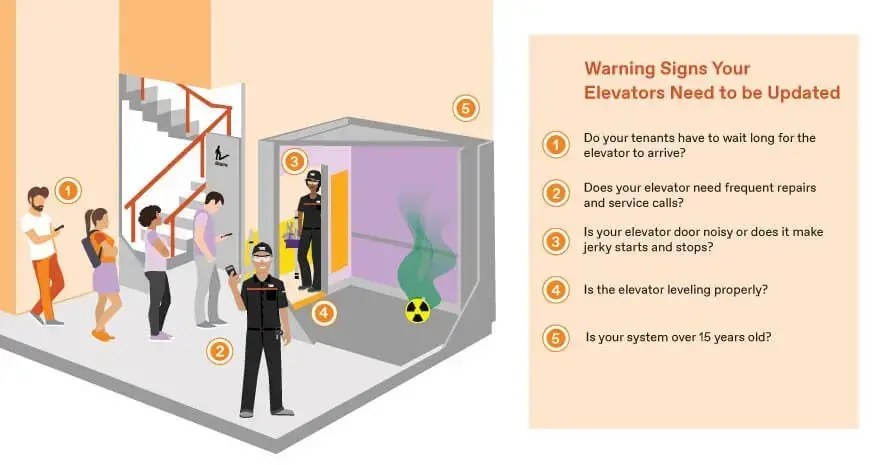
Most modernizations improve elevator traffic efficiency based on traffic analysis studies. You can also add an AGILE Destination Dispatch Selection Control (DSC) solution that optimizes elevator travel time and improves building traffic.
Like aging automobiles, your aging equipment can go out of service more frequently, and it can become harder to obtain replacement parts. Frequent elevator downtime can also cause tenant frustration to grow. Modernization can prevent these scenarios.
This can be a sign of aging door motor, which is the leading cause of elevator outages. Most modernization packages include door operator replacement and shaft door refurbishment.
In older elevators, improper leveling can cause passenger missteps or even falls due to outdated hydraulic valves, motor issues or aging leveling technology. Modernizations replace these outdated parts with newer components, which helps passengers safely enter and exit your elevators.
Elevator components rely on electronics as well as mechanical parts to function. These components include parts supplied by external vendors. Sometimes, vendors discontinue the production of these parts.
If the discontinued part stops functioning on your elevator, the entire system can go out of service, and it can be extremely challenging and costly to return your elevator to operation. This is not a situation you want to explain to your tenants, and it can happen in spite of your elevator receiving regular high-quality service and maintenance.
The good news is your regularly-scheduled service and maintenance can potentially let you know of a part that might need to be replaced, so you can budget for larger repairs more effectively and avoid downtime. However, a full modernization is typically the best long-term solution for aging equipment.

If you’re answering yes to most of these questions, get your elevator surveyed to determine its performance, safety and code compliance. This process measures acceleration, deceleration, vibration, door opening times, sound and reveals components most in need of improvement.
Once you have the results, work with an elevator professional to determine if a modernization is necessary or if other solutions can be tailored to your budget. You can also develop a plan to phase in larger improvements to help keep your budget in line.
And you must also consider your tenants. Unlike new elevator installations, modernizations take place in a live building environment. This means technicians will be working each day in a building full of tenants. There will be periods of inconvenience and noise, so work with professionals that have the ability to quickly understand, address and prevent problems.
Each building and modernization project is unique, so reach out to us because knowledgeable and resourceful experts are a must. Besides elevator modernization services we also offer comprehensive elevator maintenance services, elevator repair services, escalator repair and maintenance services and moving walk repair and maintenance services.
Q: What are the most common warning signs that an elevator needs updating?
A: The most frequent red flags include strange noises (like grinding or squeaking), jerky starts and stops, slow door operation, improper leveling with the floor, and a sudden increase in service callbacks. If you are experiencing two or more of these issues, it is a strong indicator that your system's core components are reaching the end of their lifecycle.
Q: Why is my commercial elevator suddenly making loud squeaking or grinding noises?
A: Unusual sounds are rarely a minor issue; they typically indicate severe mechanical wear and tear. Grinding or squeaking often points to deteriorating cables, worn-out sheaves, or failing motor bearings. These issues not only compromise passenger comfort but can also lead to complete system failure if ignored.
Q: What does it mean if the elevator doors are slow to open, close, or frequently jam?
A: Elevator doors endure the most physical stress of any component. Sluggish, unresponsive, or frequently jamming doors are a classic sign of aging door operators or degraded track mechanisms. Since malfunctioning doors are a leading cause of elevator entrapments, this warning sign requires immediate professional assessment.
Q: Are jerky starts and stops a sign that my elevator needs modernization?
A: Yes. A healthy elevator should provide a seamless, smooth transition between floors. Jerky movements or intense vibrations usually mean the drive system, frequency inverter, or control valves (in hydraulic systems) are obsolete or failing. This not only creates an uncomfortable ride but also increases the risk of tripping hazards.
Q: How often is "too often" for elevator service callbacks and breakdowns?
A: If you are calling your maintenance provider for repairs more than four to six times a year (outside of routine scheduled maintenance), your elevator is costing you more than it should. Frequent breakdowns are a definitive sign that temporary fixes are no longer sufficient and a comprehensive update is necessary.
Q: Why is the elevator cabin failing to align perfectly with the floor?
A: This issue, known as "poor leveling", is a significant safety and liability risk, as it creates a tripping hazard for passengers. It is often caused by outdated or worn-out leveling sensors, brake issues, or aging hydraulic valves that can no longer maintain precise control over the cabin's position.
Q: Is a sudden increase in energy bills a warning sign of an outdated elevator system?
A: It certainly can be. Elevators installed more than 15-20 years ago utilize outdated motor and drive technology that consumes significantly more electricity. If your building's energy costs are spiking without a clear cause, your aging elevator's inefficient power draw could be the culprit.


Key Takeaways
What are the primary warning signs that your elevator needs an update?
Key indicators for property managers include excessive noise, jerky starts and stops, and frequent service callbacks. These issues not only cause tenant frustration but also signal that the equipment is struggling to maintain safe, reliable operations.
How long does a typical elevator last before needing modernization?
While high-quality, regular maintenance can keep your elevator safely moving for 12 to 15 years, it will eventually need a comprehensive upgrade. Once a system surpasses 15 years of age, a full modernization is generally the most cost-effective, long-term solution.
What are the hidden risks of delaying upgrades on older elevators?
Aging elevators rely on specific mechanical and electronic parts that external vendors frequently discontinue. If one of these obsolete parts fails, your entire system can suffer extended downtime, resulting in highly challenging and expensive repairs.
What is the first step to take if you notice performance issues?
You should schedule a professional elevator survey to evaluate the system's performance, safety, and code compliance. This diagnostic process measures crucial factors like vibration, deceleration, and door opening times to reveal which components require immediate attention.