 India
India









Elevator Modernization Options Explained: The Ultimate Guide for Indian Property Owners
For property owners and facility managers in India, elevators affect daily movement, tenant comfort, and building operations. This matters for commercial buildings, residential towers, malls, hospitals, and mixed-use properties. Lift performance affects tenant satisfaction, operating costs, and property value.
However, as elevators age past the 15-to-20-year mark, performance often starts to decline (related article: Five Warning Signs that an Elevator Needs Updating). You may begin to notice an uptick in tenant complaints regarding long waiting times, more frequent out-of-service notices, or uncomfortable cabin vibrations. Furthermore, older spare parts can become harder to source. When repairs shift from preventive maintenance to frequent urgent repairs, it is time to look at the future.
This guide explains the main elevator modernization options. We will explain the main ways to upgrade your building’s lift system, ensuring you make a practical decision based on budget, downtime, safety, and long-term building value.
Before diving into the specific options, it helps to understand why modernization affects more than mechanical performance. It also affects safety, energy use, tenant comfort, and property value. In May 2026 the Central Electricity Authority (CEA) of India proposed an overhaul of electricity tariffs and recommended a steep increase in fixed monthly electricity charges. Elevators are one of the factors that impact the power consumption of buildings.
So, while Indian property owners face strong competition for tenants, buyers, and long-term asset value, outdated elevators can directly impact their ability to attract and retain premium commercial tenants or residential buyers and drive up operating costs. Modernizing your elevator system helps address these issues by focusing on critical improvements:
- Safety and Compliance: Upgrading outdated relay-based systems to modern microprocessors ensures more accurate floor leveling, reducing tripping risks in older lifts. Modern infrared light curtains also replace mechanical safety edges, preventing doors from closing on passengers.
- Energy Efficiency and Cost Savings: Older traction motors and lighting systems often use more power than newer systems. Modernization introduces variable-frequency drives, LED cabin lighting, and regenerative braking technologies, which can return some energy to the building as the elevator descends. These upgrades can reduce elevator energy use significantly. More on this in our article on lift power consumption.
- Refined Ride Comfort: Ride comfort matters in offices, hotels, hospitals, and residential buildings. These upgrades reduce vertical vibrations, sudden acceleration, and horizontal swaying, ensuring a smooth, silent ride. In India’s tropical climate, adding cabin air conditioning during modernization can also improve passenger comfort.
- Better Traffic Flow: If your building’s occupancy has increased over the years, older elevators will struggle to keep up. Smart dispatching systems can group passengers by destination, reducing wait times without needing to expand the elevator shaft.
Elevator modernization does not follow one fixed path. Depending on the current state of your machinery, your budget, and your building’s daily use, you can choose from five main options.
1. Component Upgrades (Targeted Modernization)
A component upgrade is the most targeted approach to modernization. Rather than overhauling the entire system, this option replaces only the aging parts that cause repeated problems. Common targets include the door operators, call buttons, or the hoisting motor.
Because the doors are the most frequently moving part of an elevator, upgrading the door drives and mechanisms can eliminate nearly 70% of routine service calls. Component upgrades are cost-effective and require minimal downtime, making them ideal for newer elevators that are generally reliable but suffer from an isolated, recurring fault.
2. Partial Modernization (System-Level Upgrades)
When an elevator system is structurally sound but older or outdated, partial modernization is often a practical financial choice. This process involves upgrading core operational systems (such as the controller, the drive, and the electrical wiring) while retaining heavy, durable infrastructure like the elevator car shell, the guide rails, and the counterweights.
By keeping reusable components, building owners can lower the upfront cost and reduce waste. A new microprocessor controller installed during a partial modernization will improve floor leveling, acceleration, and fault diagnosis, effectively allowing an older lift to operate with modern control technology.
3. Modular Modernization
For property management firms dealing with tight annual budgets, modular modernization spreads the work across phases. Instead of upgrading multiple systems at once, the modernization is broken down into distinct modules spread over several months or even years.
For example, Year 1 might involve replacing the door systems and cabin aesthetics to improve how tenants experience the lift. Year 2 could focus on upgrading the controller and drive system to improve energy efficiency and ride quality. This approach allows Indian facility managers to transform their elevators without requiring a large upfront cost, ensuring steady cash flow while improving building safety over time.
4. Full Replacement (Complete Overhaul)
Some elevators become too old or worn to upgrade safely or cost-effectively. In other cases, the building now serves more people than the original lift system can handle. In a full replacement, most existing lift parts are removed from the hoistway. New machines, controls, and cabins are installed. Read our related article: How long does it take to modernize an elevator?
While this is the most expensive and disruptive option, it can offer strong long-term value for badly worn systems. It also opens the door to installing modern, machine-room-less (MRL) configurations. For instance, advanced engineering allows for high-capacity, low- and mid-rise solutions, such as the enta and meta series, to be retrofitted into existing, tight shafts, freeing up valuable building space that was previously occupied by bulky mechanical rooms. For high-traffic commercial buildings, a complete overhaul may even allow for the implementation of dual-cabin systems, where two independent cars operate in a single shaft to maximize the number of passengers the system can move.
5. Cosmetic Upgrades (Car Renovation)
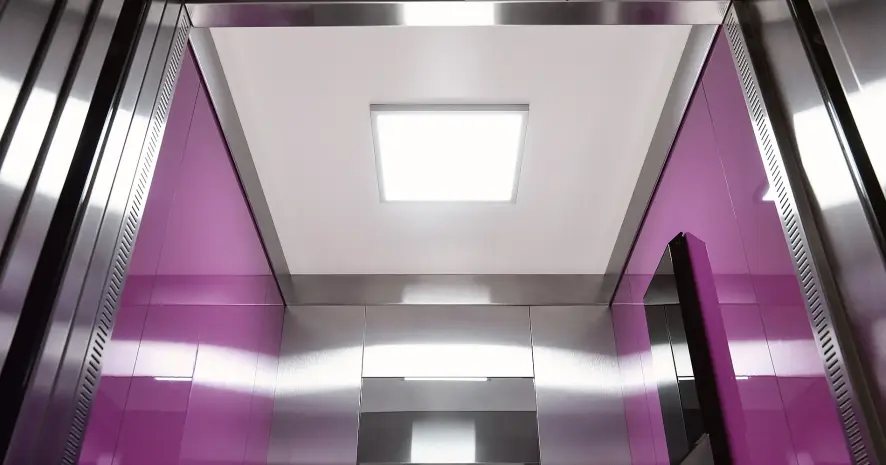
If your elevator runs flawlessly but looks like it belongs in the 1990s, a cosmetic upgrade is the answer. This option focuses on the elevator interior. Upgrades typically include installing scratch-resistant wall panels, durable new flooring, modern handrails, frameless mirrors, and energy-efficient LED lighting.
While cosmetic upgrades do not improve the mechanical speed or safety of the lift, they can change how passengers view the building. A sleek, modern cabin can make the building feel newer and better maintained, making it a useful option for landlords looking to justify higher rental yields or attract premium corporate tenants.
At TK Elevator India we offer flexible modernization packages. Learn more about our options spanning from the entry level Alpha package to the more Delta package that is designed to deliver sustainable efficiency in your building. These two and other other packages can be found on our Elevator Modernization page.
The table below compares the pros, cons, and best use cases for each option.
| Modernization Option | Pros | Cons | Best Suited For (When to Choose) |
|---|---|---|---|
| Component Upgrades | Lowest cost; minimal downtime; solves specific mechanical issues quickly. | Does not address system-wide aging; underlying tech remains old. | Lifts under 10-15 years old suffering from an isolated, recurring issue (like faulty doors). |
| Partial Modernization | Good value; keeps heavy components; improves speed and energy use. | Takes the elevator out of service for several weeks; requires compatibility checks. | Elevators 15-20 years old where the mechanical structure is solid but controllers/drives are obsolete. |
| Modular Modernization | Spreads capital expenditure over time; allows budget flexibility; steady improvements. | Total cost over time may be slightly higher than a lump-sum partial modernization. | Property owners with fixed annual budgets who need to avoid a large one-time cost. |
| Full Replacement | Gives the lift system a new service life; unlocks modern space-saving technology (MRL). | Highest upfront cost; longest building disruption; requires extensive planning. | Lifts over 25 years old; when spare parts are no longer available, or building use has outgrown the old lift capacity. |
| Cosmetic Upgrades | Fast installation; instantly boosts building prestige and tenant perception; low cost. | Zero mechanical or safety improvements; does not improve energy efficiency. | Mechanically sound lifts in premium buildings that need a visual refresh to attract high-paying tenants. |
Elevator modernization is a technical project. It requires accurate planning, skilled engineering, and a clear understanding of the Bureau of Indian Standards (BIS) safety guidelines. More on this in our article on Indian elevator safety regulations.
A successful upgrade depends on good components and correct installation. When evaluating your options, look for a partner with a strong local presence and a reliable service network. At TK Elevator India, our modernization approach focuses on five areas: Safety, Performance, Aesthetics, Comfort, and Efficiency. Your building may need a cabin refresh, a system upgrade, or a full replacement. A planned approach helps the lift system run safely and reliably for years. Related articles you may also find relevant: How often do lifts need to be serviced?, What Elevator Tech Cuts Standby Power and a full analysis of elevator lifecycle costs.
Q: What is the average lifespan of an elevator before modernization is needed?
A: Most commercial and residential elevators last about 15 to 20 years. Beyond this point, mechanical wear, outdated relay systems, and the scarcity of spare parts usually make modernization a more cost-effective choice than continuous, expensive repairs.
Q: How long does the elevator modernization process take?
A: The timeline depends on the project scope. A cosmetic or targeted component upgrade may only take a few days. A partial modernization typically takes 2 to 4 weeks per elevator, whereas a full system replacement can take 6 to 8 weeks or more.
Q: What is the difference between partial modernization and full replacement?
A: Partial modernization replaces the main control and operating systems of the elevator (controllers, motors, wiring, doors) while keeping the main structural parts (guide rails, counterweights, cabin shell). A full replacement removes most existing lift parts from the hoistway and installs a 100% brand-new system from the ground up.
Q: Will elevator modernization save on electricity bills?
A: Yes, in many cases. Modernizing an older system with Variable Frequency Drives (VFDs), gearless permanent magnet motors, LED lighting, and regenerative braking can reduce an elevator's energy consumption by 30% to 50%.
Q: Do I need to vacate the building during an elevator upgrade?
A: No, buildings do not need to be vacated. However, there will be disruptions. For buildings with multiple elevators, work is phased so that at least one elevator remains operational at all times. For single-elevator buildings, temporary accessibility plans must be communicated with tenants.
Q: Can older elevator shafts accommodate modern machine-room-less (MRL) elevators?
A: In most cases, yes. MRL elevators are designed to be compact, with the machinery housed directly inside the hoistway. Modernizing to an MRL system is a practical way to free up the space previously used by a penthouse machine room.
Q: What are the key safety features added during modernization?
A: Modernizations can help older lifts meet current safety requirements. Upgrades include precise floor-leveling technology (preventing trips), infrared door curtains (preventing doors from closing on people), advanced overspeed governors, and modern emergency communication systems.
Q: Is it possible to upgrade just the elevator cabin aesthetics?
A: Yes. If your lift is mechanically sound, you can perform a cosmetic upgrade. This involves fitting new interior wall panels, ceilings, lighting, flooring, and digital display boards without touching the underlying machinery.
Q: How does elevator modernization impact property value in India?
A: Modern elevators can improve a building's marketability. They reduce wait times, offer a smooth and quiet ride, look visually appealing, and improve safety. This allows landlords to demand higher rental yields and increases the overall capital value of the property.
Q: Are spare parts readily available for older elevators in India?
A: As elevators age past 20 years, Original Equipment Manufacturers (OEMs) often phase out production of legacy parts. This limited supply can increase repair costs and extend downtime. Modernization replaces these obsolete parts with current technology, so replacement parts are easier to source in the future.


Key Takeaways
When is it time to modernize a building's elevator?
Typically around the 15-to-20-year mark, or whenever a property begins experiencing frequent out-of-service notices, longer wait times, uncomfortable cabin vibrations, or difficulties sourcing spare parts.
Why is upgrading crucial for Indian property owners?
Beyond ensuring tenant safety and comfort, modernization directly addresses rising operational costs. Upgrading to modern drives and LED systems can reduce elevator power consumption by 30% to 50%, helping offset steep increases in local electricity tariffs while boosting overall property value.
What are the primary modernization options available?
Depending on your budget, building traffic, and mechanical wear, you can choose from five main paths: targeted component upgrades, system-level partial modernization, phased modular modernization, a full replacement (complete overhaul), or visual cosmetic upgrades.
Do I need to replace the entire elevator system to see a return on investment?
No. If the core physical structure is sound, options like partial modernization allow you to retain heavy infrastructure (like the cabin shell and guide rails) while solely upgrading outdated technological components (like controllers and motors). This significantly reduces both upfront costs and building downtime.