Accessibility for all generations

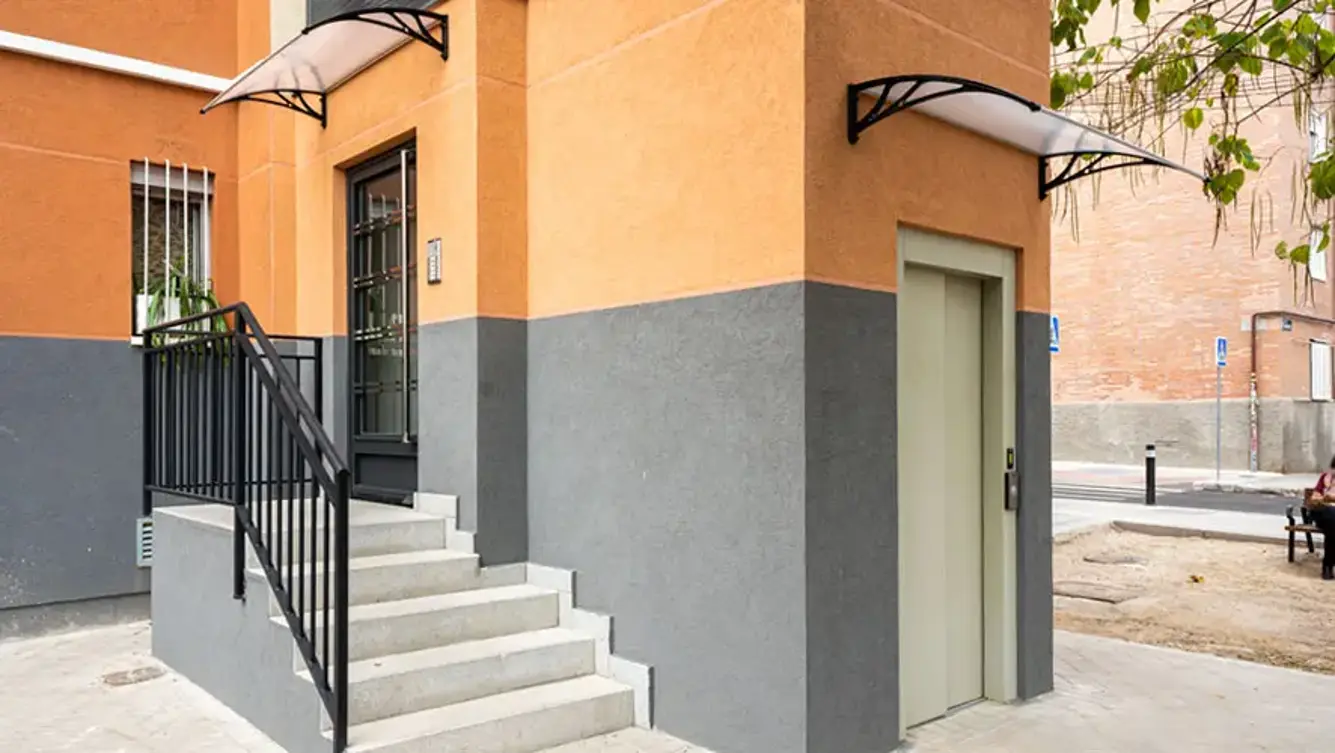
Elevators bring a high quality of life to the people who live in older buildings. For example, elderly people who have lived in a building for decades and who wish to stay in their homes – and others with personal mobility issues – can continue to do so, when a lift is added.

And it's not a difficult thing to do, practially all existing buildings in our city centers can be easily retrofitted or rejuvenated with today's flexible, state-of-the-art renovation lifts. With such a mobility upgrade, they will continue to be attractive and economically viable places to live and work. Transplanting mobility into the heart of your older building increases its lifespan, and makes life for tenants and appartment owners so much more enjoyable.

Our lifts are designed to fit almost any building. That means that retrofits are easy – either inside or outside the house.

The 3 most common ways to retrofit a lift
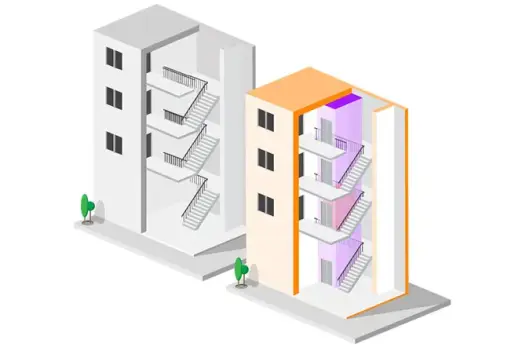
In the staircase inside

If the existing space in the stairwell is (or can be made) large enough to accomodate a lift, this is the preferred option of many building owners. We will help you with the necessary adaptations, and install the lift, integrating it into the existing structure and taking maximum care of the aesthetic result.
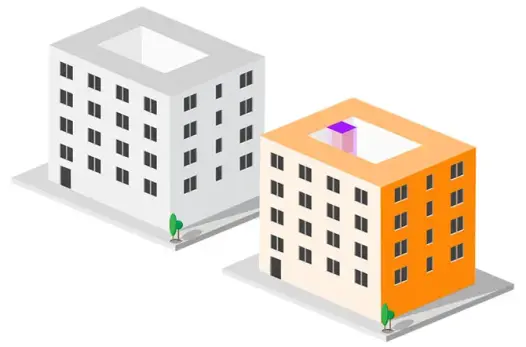
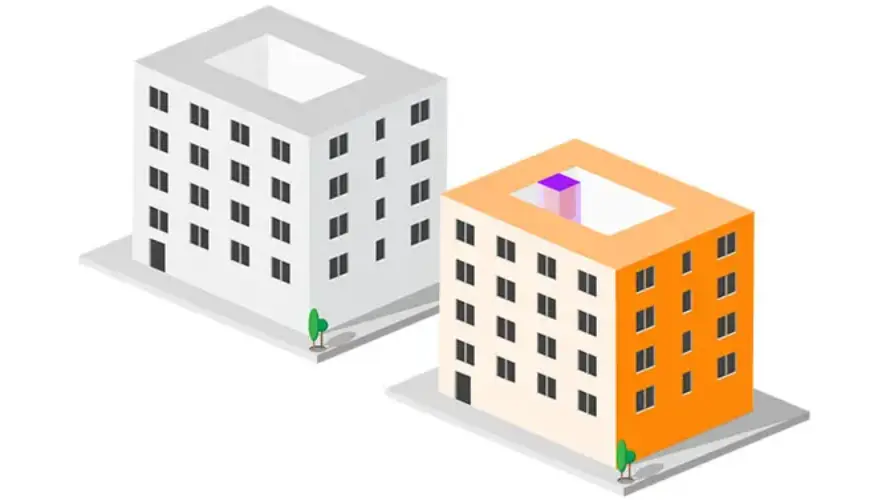
In the courtyard externally

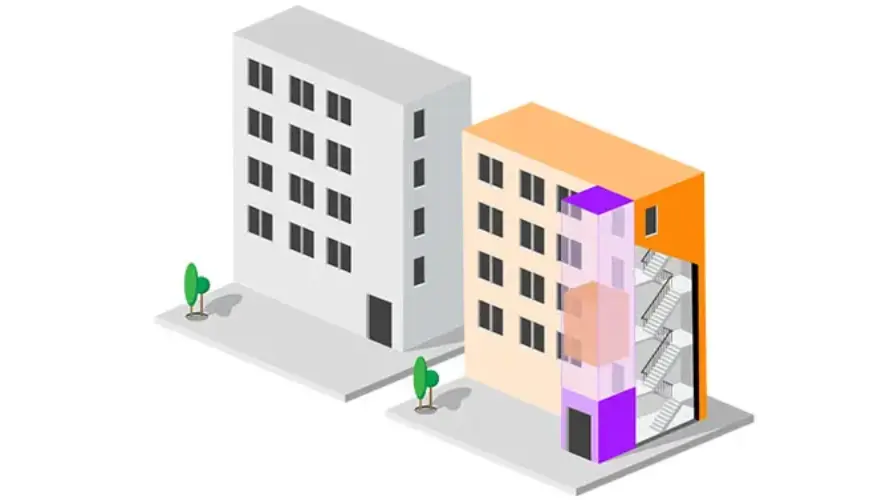
If the architecture of the building does not allow the installation of a lift inside, it can be added externally in a concrete or metal-glass shaft construction. If available, an interior courtyard is the preferred option because it is usually less exposed to wind and wheather, and construction permits are easily secured.
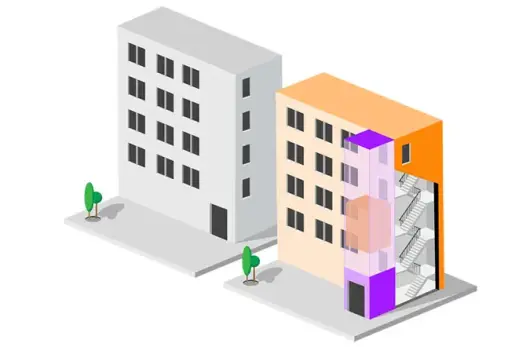
On the façade externally

Even without space inside or a courtyard, there is still the option to attach an external elevator to the building façade. Special consideration will be given to aesthetic suitability, municipal façade regulations, and (if required) access control and protection from vandalism.

... and this is how it works:

TK Elevator has extensive experience in adapted solutions for buildings without lifts. Our specialist experts will advise you, define the best solution for your needs, taking into account the uniqueness of your building, and guide you through the entire process. We will take care, if you wish, of a turnkey project, managing the preparation of the project and project management, the documentation for obtaining the necessary licences, the complementary auxiliary works (civil works, locksmithing, electricity etc) and even help you secure government financing through support programmes.
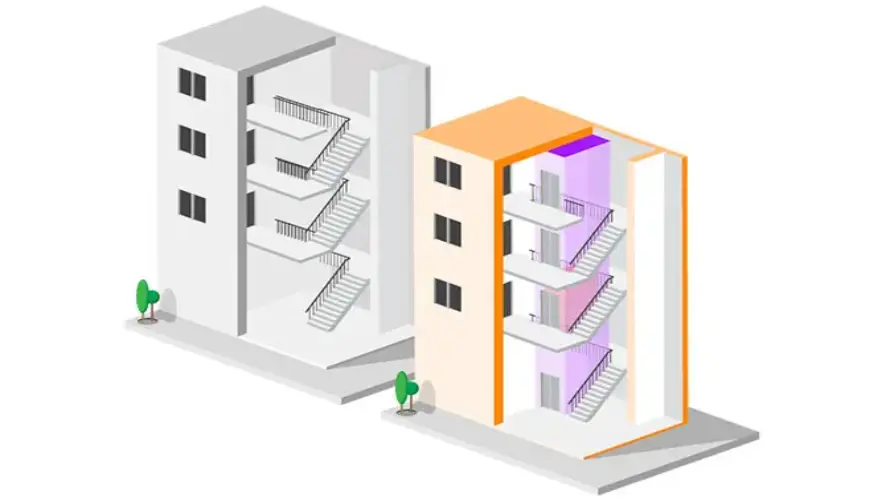
Installation process for stairwells

1. Stake out and pit construction. Stake out the lift shaft and the pit, excavation on the ground floor for pit and diversion of lines and pipes, if applicable.

2. Dismantling of the staircase handrails, installation of protections.

3. Construction of the shaft (concrete, brick, or metal and glass) with special attention to the aesthetic characteristics or particular protections of the staircase.

4. Installation of the lift, mechanical assembly and electrical connections.

5. Execution of finishing touches and completion of work. (Re-)assembly of staircase handrail, plaster and paint, cleaning and commissioning of the lift.

Standard installation process for courtyards and façades

1. Layout, excavation and foundations: Architectural design, stake out areas of construction, location of pipes, excavation of the ground and foundations.

2. Scaffolding: Assembly of the scaffolding structure and installation of safety measures.

3. Openings in the façade: Diversion of installations, creation of new lift shaft and door openings.

4. Lift installation: Electrical installation of the new lift and lighting, motor and mechanical installation of the lift.

5. Completion of work: Painting and finishing touches, cleaning of the building site, commissioning and handover of documentation.

Installation process for courtyards and façades with floor levelling

On occasion, the installation of a new lift on the façade or courtyard can require a reconstruction of the staircase, adapting it so that the staircase landings are accomodating the elevator stops on each floor.

1. Layout, excavation and foundations: Architectural design, stake out areas of construction, location of pipes, excavation of the ground and foundations.

2. Scaffolding: Assembly of the scaffolding structure and installation of safety measures.

3. Openings in the façade: Diversion of installations, creation of new lift shaft and door openings.

4. Construction of new staircase: Demolition of staircase, modular construction of new staircase, construction of new landings and inclusion of handrail.

5. Lift installation: Electrical installation of the new lift and lighting, motor and mechanical installation of the lift.

6. Completion of work. Painting and finishing touches, cleaning of work, commissioning and delivery of documentation.

This lift is for you: EOX Renew

TK Elevator's eco-efficient and natively digital elevator for existing buildings adapts to your architecture and integrates seamlessly on the inside or exterior.

Learn More about EOX Renew

Interested in a elevator retrofit? No matter how small the building, we are able to add a lift on the insde or the outside of your building with our ultra-flexible mobility solutions. Our experts will be happy to advise you on the best suited options.

Get in touch with one of our branches near you!